CRMs are important for home care agencies. They help keep track of prospective clients, organize conversations, and make sure follow-up happens. When a family calls about care, the team needs to know what was discussed and what happens next.
Caregiver relationships need that same attention. Their conversations with the office contain information that affects scheduling, client matching, and the agency’s ability to take on new cases.
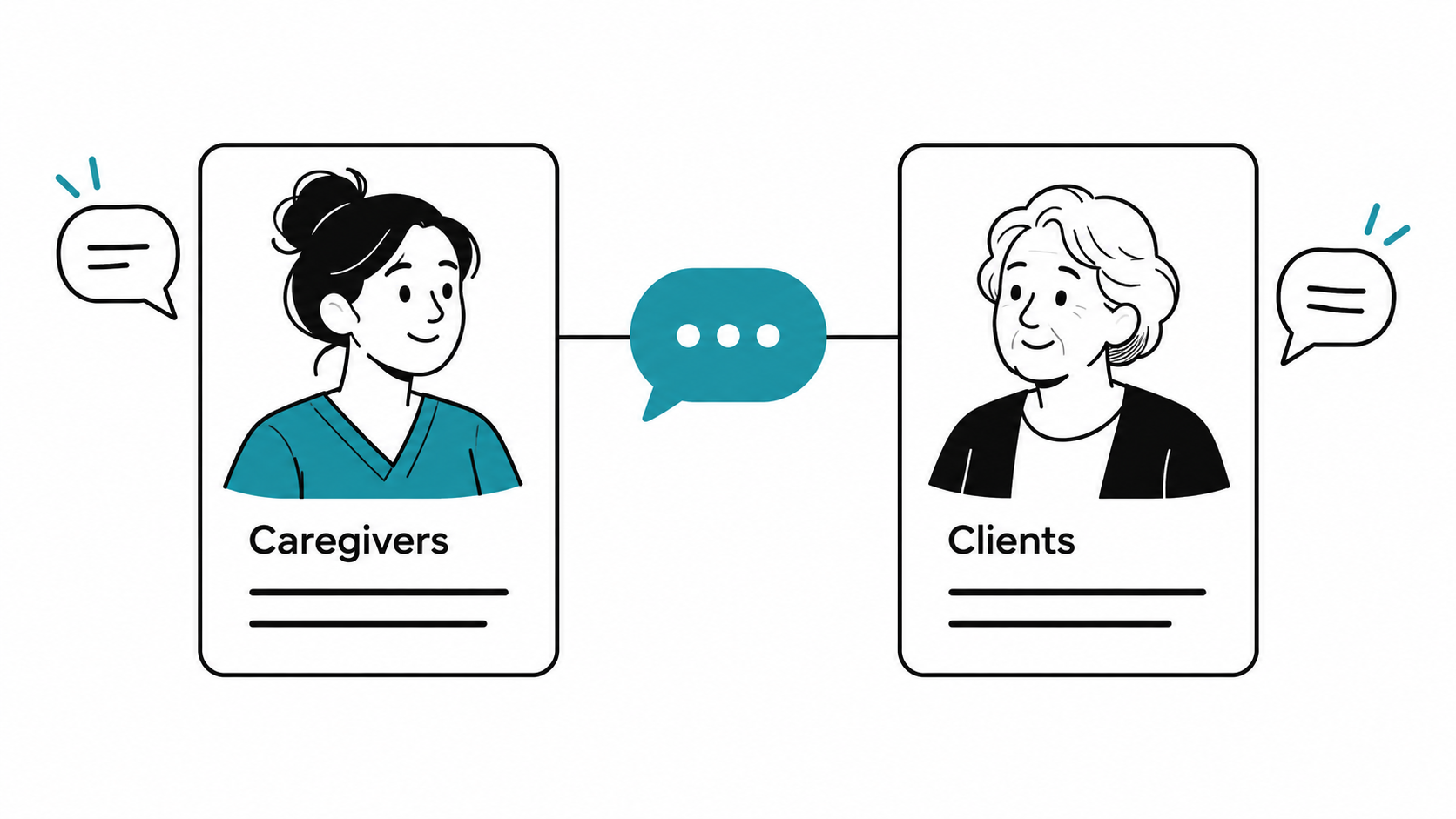
A home care CRM should help you keep track of both sides of that relationship.
The relationship goes beyond the schedule
Your scheduling system shows when and where a caregiver works. But knowing someone’s schedule is different from understanding their relationship with your agency.
Are they looking for more hours? What types of cases do they prefer? Have they raised a concern about an assignment? Are they waiting for someone to call them back?
These details often come up over the phone or during a conversation in the office. They give your team useful context for making decisions and supporting caregivers.
If that context stays in one person’s memory, it becomes harder for everyone else to act on it. The caregiver may have to repeat themselves, and the office may miss a chance to address a concern or offer a case that fits.
Follow-up matters for caregivers and clients
Agencies understand the importance of following up with a prospective client. Someone asking about care needs a response, and the team needs a record of the conversation.
A caregiver asking for more hours or help with a case also needs follow-up.
Keeping track of what was discussed and what the office agreed to do helps the team keep its commitments. It also means another staff member can continue the conversation when the original person is unavailable.
The phones get busy and calls can interrupt the flow of the day. A shared history helps important information stay available through those interruptions.
Both relationships affect your ability to provide care
Bringing in a new client is only part of starting care. You also need a caregiver whose availability, experience, and preferences fit the case.
Information from caregiver conversations can help your team make those connections. It can also show owners where the office needs to pay attention, whether that means unanswered requests for hours or recurring concerns about communication.
Managing client and caregiver relationships together gives the agency a fuller picture of what is happening.
How SmartAutomations.Care supports both
SmartAutomations.Care’s CRM capabilities help agencies keep track of caregiver relationships alongside client relationships, with conversation history that gives the team context for follow-up.
It also automatically documents phone calls and in-person conversations and puts important details into the agency’s EMR or scheduling system. The information becomes usable records, helping the team act on what was discussed.
Home care depends on relationships with the people receiving care and the people providing it. Your CRM should help you take care of both.