Every time I talk to a home care agency, one thing stands out: so much of what keeps the business running never actually shows up in the systems.
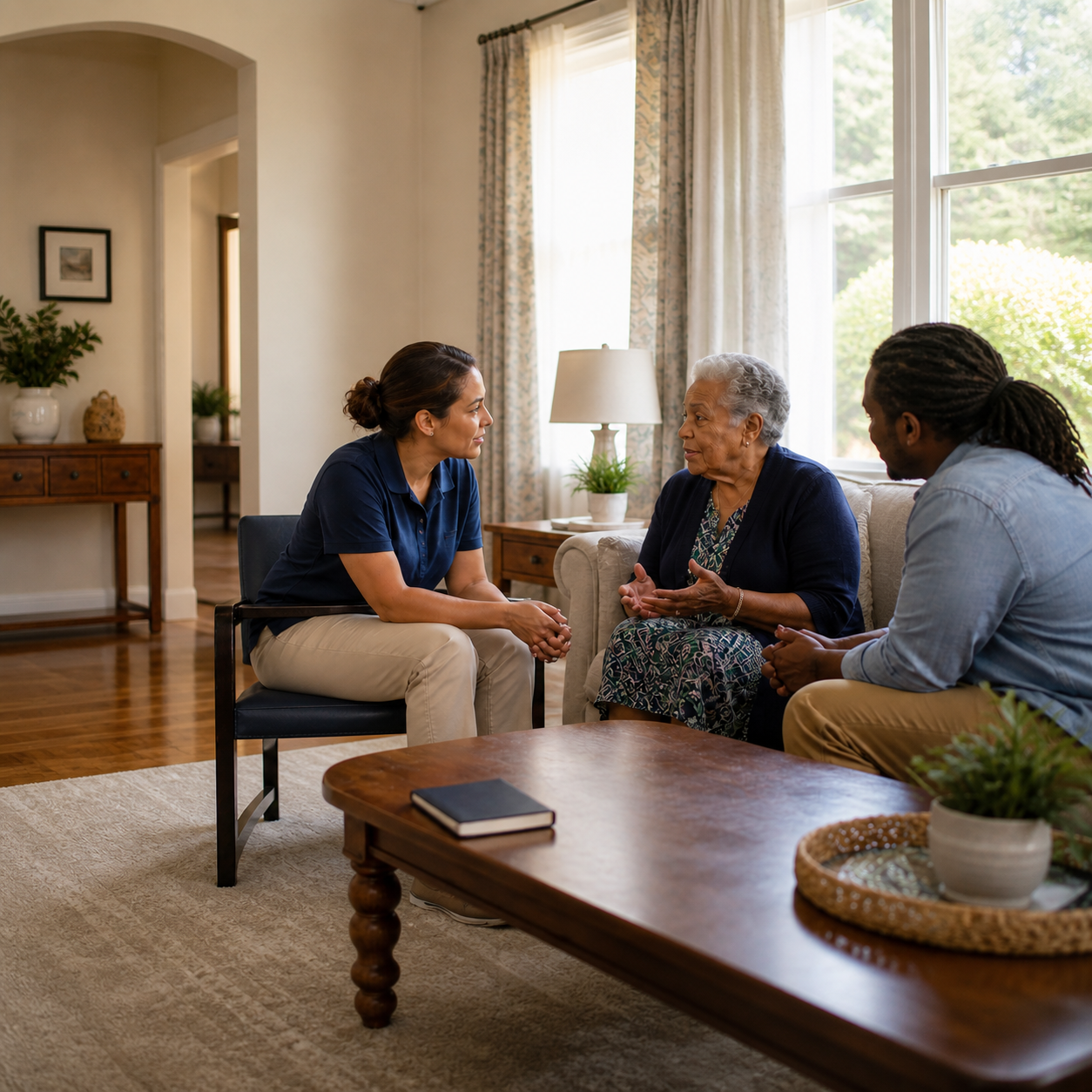
It happens in clients’ homes, sitting with a client and their family and hearing what is really going on. It happens during one-on-one visits with caregivers. It happens when we meet with referral sources, and in the constant stream of internal conversations between people trying to keep everything moving.
A conversation in a client’s home might reveal a concern the family had not shared before, a change in needs, or a detail that will directly affect the next visit. A one-on-one conversation with a caregiver might uncover something they need support with, a scheduling issue, or important context the office needs to understand. Those moments are often where the most important information comes out.
They are not side notes to the work. They are the work. Those conversations carry the context that makes everything else possible and help the team provide better care.
At the same time, the office never slows down. There are people to manage, coverage to find, intakes to follow up on, and a steady stream of needs that demand attention. In the middle of that, a conversation can easily get set aside with every intention of circling back to it later.
Someone might plan to document it after the next task. Someone might send a quick message. Sometimes it gets written down. Sometimes it does not. And sometimes the only place it exists is in the memory of the person who heard it.
The intent is never the issue. Home care teams care deeply about accuracy and communication. The real challenge is that capturing and translating conversations into documentation is an additional step in a day that is already overloaded.
There is also a bigger opportunity here: not every conversation should lead to the same outcome.
What happens after a conversation should depend on why it happened and what was discussed. Sometimes the information needs to become part of a record. Sometimes someone needs to take the next step. Sometimes the value is simply making sure the next person has the right context before they make a decision or walk into a visit.
When you start to see conversations this way, they become part of the operational flow itself, not something separate from it.
When a conversation changes what the team knows or needs to do, it should be able to move directly into the systems the team already depends on. Otherwise, information gets split across places. One version lives in memory or informal notes, while another version lives in the EMR or scheduling system.
Decisions get made without full context. The record may look complete on the surface, but it is missing the nuance that explains what is actually happening.
This is where better tools can make a real difference.
Instead of relying on staff to manually document everything later, SmartAutomations.Care can help capture the key details in the moment and route them where they need to go. That might mean turning a spoken update into a structured note, creating a follow-up task, or attaching context directly to a client record so the next person has what they need before they walk into a visit.
The goal is not to add more steps. It is to remove the mental load of remembering what needs to be written down later and where it needs to go.
SmartAutomations.Care was built around this reality.
We help agencies take the information that comes out of in-person conversations and turn it into the right next step inside their existing workflow. The focus is on making sure the important parts of a conversation are captured and routed automatically, so nothing gets lost between the moment it is shared and the moment it is needed.
When that happens, something important changes in the day-to-day experience of the team. Staff spend less time worrying about whether they remembered everything correctly. They spend less time retracing conversations or trying to reconstruct details later. And they spend more time engaging with the people in front of them.
Home care runs on conversations. The phone is part of that, but it is only one piece of a much larger picture.
The conversations happening in homes, in the office, and in the field matter just as much. When they are supported with the right tools, they stop being something people have to manage manually and start becoming something that naturally moves the work forward.